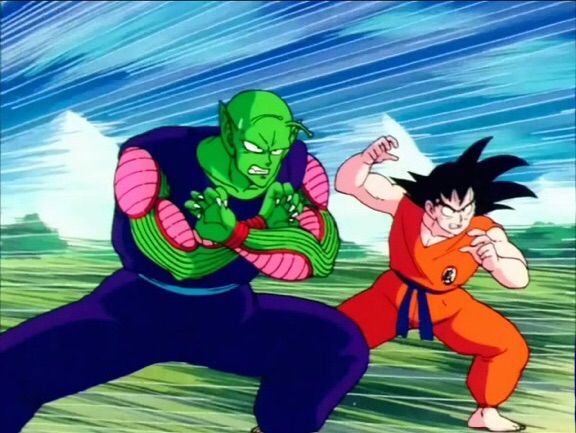
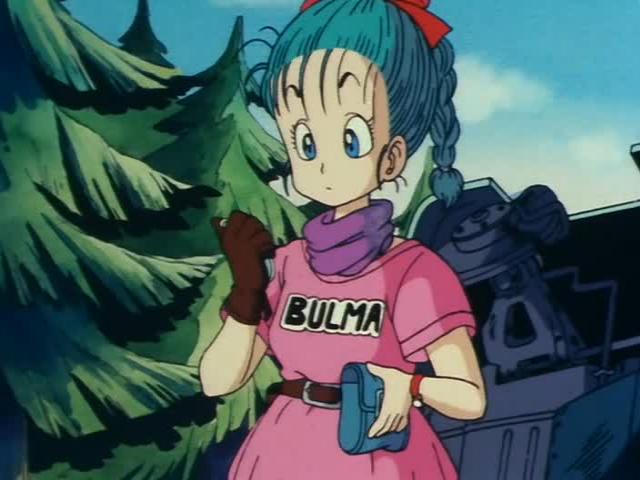
(With apologies and indeptedness to Spwack's Reverse Owlbear Stew and Phlox's Orbseeker.)
For each stat, roll 3d6 and write down half the total (rounded down) for the stat and the lowest die as the defense (using the highest lowest die for each pair of stats).
- Strength and Constitution -> the FORT defense (blocking).
- Dexterity and Wits -> the REF defense (dodging).
- Intellect and Charm -> the WILL defense (resisting).
Your max HP is equal to the sum of your three defense ratings. Resting a few minutes and taking refreshment restores 1 lost HP after a fight. Taking a night's rest in a safe place restores 1d6 HP. Regular attacks do 1d6 damage, awkward or unarmed ones do the lower of two d6, dangerous ones do the higher of two d6 and things you wouldn't expect someone to survive do 2d6 or more.
To succeed on something that needs a roll, you must roll a d20 under or equal to the relevant stat (Ref's decision) plus all ranks in relevant skills. If this is a roll against an obstacle (like a foe's defense), your roll must be higher [not equal to] the relevant obstacle or defense rating. If this is an opposed roll and your opponent rolled under or equal to their total, you must roll under or equal to your total but higher than their roll.
When you create your character, split 10 ranks between the following skills. You may not start with more than 4 ranks in any skill.
- Acrobatics
- Attraction
- Engineering
- Fencing
- Hypnosis
- Intimidation
|
- Medicine
- Naturalism
- Navigation
- Physics
- Riding
- Skullduggery
|
- Sailing
- Shooting
- Stealth
- Striking
- Swimming
- Wrestling
|
After an adventure or a season of training, you may roll 2d6 for up to three different skills you exercised. If the result is more than your current ranks in the skill, gain a rank. You can never gain more than ten ranks in a skill.
Characters who carry more things than their Constitution can't have reduce all their defenses by the excess (gear never affects HP). Bulky items count as two things, thrown weapons and similar small stuff can be bundled.
Characters start as fighter B, orbseeker B or fighter A/orbseeker A.
fighter type characters
Fighters cultivate their qi in order to perform amazing martial arts. For each template, fighters increase one of their defenses (and therefore their max HP) by 1. Gain a fighter template whenever you defeat a foe that is stronger than you.
- A Bronze Body. If you take no action other than resisting an attack, reduce damage you take from it by your relevant defense.
- B Golden Core. You have a pool of qi dice (QD) equal to the number of fighter templates you have. You may roll any number of QD from your pool instead of normal damage dice for an attack. Whenever a 6 is rolled on a QD, add 5 to the sum of the dice and reroll the die (repeating this for subsequent 6s). After rolling QD, your pool is diminished by 1QD for every reroll. Your pool is restored by spending a suitable amount of time eating, resting or meditating.
- C+. +1 technique.
A list of sample techniques follows. Don't roll QD for an attack unless it hits.
- One Hundred Blows. Deals [sum]x2 damage, divided between all the targets you can hit with (separate) Strength attacks. There is no upper limit on the number of targets.
- Concussion. A Constitution attack that deals [sum] damage to everyone within [dice]x2 paces of you and 1 damage to you.
- Monkey Arms. You may make up to [dice] Dexterity attacks at targets up to [sum] paces away.
- Owl Eyes. Whenever your REFLEX saves you from an attack, you may immediately use this technique to make a Wits attack dealing [sum] damage to your attacker.
- Feint. An Intellect attack that paralyzes the foe for [dice] turns (or until they take damage) instead of damaging them.
- Demon Beam. A Charm attack that deals [sum] damage that cannot be reduced to a target up to [dice]x5 paces away.
- Many Shadows. Creates [dice] duplicates of you, dividing your current HP between them (round down). Any duplicates that clasp hands re-unite add their HP together. Otherwise, all duplicates (and their HP) except your choice of one dissolve after 60 minus [sum] minutes.
- Light Body. You can fly, faster than anyone with a lower [sum].
- Iron Body. [sum] body parts become indestructible for [dice] rounds.
- Devil Feint. Calls for an opposed roll with one foe (you get +[dice] to your total), the loser of which takes [sum] damage.
- Fierce Aura. You glow brightly for [sum] minutes. During this time, your HP is increased by [dice]. When this ends, lose half your current HP (rounded down).
- Double Strength. For 30 minus [sum] turns, increase all your stats and defenses by [dice]. After the effect ends, lose half your maximum HP.
- Fusion. Using this technique requires two fighters who know it to each select the same number of QD (without consulting each other beforehand); if they fail to do so, the fusion fails.
A fusion adds together the stats, defenses and HP of the fighters who formed it, uses the better of either of their skill ranks for each skill and has QD equal to however many dice were not exhausted in the fusion. After [the lower of the two sums] turns, the fusion ends and the two fighters each get half the fusion's HP, rounded down.

orbseeker type characters
Orbseekers roam the earth, seeking communion with mystic orbs. For each template, orbseekers gain one rank in each of two different skills (no skill can have more than ten ranks). Gain an orbseeker template whenever you awaken a new orb.
- A Orb Waker. You can smell dormant orbs when they are nearby. If you hold one in your hand, you can awaken it (roll for a random power below) or return it to dormancy.
- B Domain. You may take a few minutes to commune with an awakened orb and ask it a question that can be answered in no more than three words. If the question is within the orb's domain, it will answer. There is a 1-in-20 chance of the orbseeker contracting Orb Madness (see below) from this consultation.
- C+. Invention. Every week that you bear an awakened orb, you have a [orbseeker templates] plus [awakened orbs] minus [current inventions] in 20 chance to create a prototype of an invention (random arcanum). These all have a [uses] in 6 chance to stop working ofter each use.
Anyone who holds an awakened orb may invoke its power, although there is a 1-in-6 chance that an orb falls dormant for a week after being invoked in this way. Awakened orbs call their bearers to one another, even from far away. A list of some sample orbs follows.
- Orb of the Ram. The bearer of this orb may conjure a tremendous force that smashes a hole in barriers up to a foot thick. If it strikes a being, it deals damage like 2QD. Domain: anger, locks and keys, unexpected acts of violence.
- Orb of the Ox. The bearer of this orb may transform into a large, monstrous form that is inconveniently large and extremely strong. Double their Strength, Constitution, FORTITUDE and HP for 3d6 minutes, at the end of which they lose half their current HP. Domain: growth, strength, ironic reversals.
- Orb of the Twins. The bearer of this orb may cause two similar things to experience what the other experiences, with the potency of the effect increasing the more similar the things are. Domain: disguises, substitutions, things that come in pairs.
- Orb of the Crab. The bearer of this orb may surround it with a magical sphere shell up to ten paces in diameter. Though transparent, nothing can pass in or out of the boundary of the sphere until the bearer lets go of the orb or one hour passes, whichever comes first. Domain: shells, walls, things that are buried.
- Orb of the Lion. The bearer of this orb may create an unbearable thunder-like rumbling, making an Intellect attacks against anyone within shouting distance. Those successfully attacked take no damage but cannot approach the orb until the thundering subsides in thirty seconds. Domain: fears, thunder and lightning, things that are heard but not seen.
- Orb of the Maid. The bearer of this orb may, in any place where things are stored, retrieve any object other than another orb that they have stored away since they first awakened the orb. It does not matter how long ago they stored the object in question or how far away it is, but this effect will not retrieve anything that has been removed by another person since it was deposited. Domain: storage, neglect, things that have been kept safe.
- Orb of the Sting. The bearer of this orb may render any amount of food or drink in their presence poisonous, resolved as an Intellect attack dealing up to 7QD of damage, divided (before rolling) between all consumers. The names of any creature slain in this way become permanently tattooed on the body of the bearer. Domain: poisons and venoms, betrayal, things that creep upon the earth.
- Orb of the Scales. The bearer of this orb may solemnize any promise or agreement between at least two people. If any one of them breaks the agreement, the others may (at their option) either transport the offender to their presence or immediately transport themselves to the offender. Domain: agreements, punishments, things that are deserved.
- Orb of the Arrow. The bearer of this orb may name any thing other than another orb that has a name and know the direction and distance to that thing. Domain: weapons, targets, things that have missed the mark.
- Orb of the Crocodile. The bearer of this orb may call forth a tremendous terrifying beast from the shadows. It obeys your commands slowly but implacably for thirteen minutes, and can only be turned away or banished by extremely bright light. Domain: darkness, deep water, unusual hybrids.
- Orb of the Jar. The bearer of this orb may make Intellect attacks that, though they deal no damage, cause the being so attacked to become imprisoned within an available, prepared vessel if two such attacks are successful before the orb falls dormant. Anyone who either opens the vessel or invokes the orb to do so may free a prisoner. Domain: prisons, traps, the contents of containers.
- Orb of the Fish. The bearer of this or may, with a touch, cause an air-breathing creature immersed in water to become a water-breathing creature or a water-breathing creature on dry land to become an air-breathing creature. This transformation is permanent and also adapts the creatures skin and limbs to their new environment. Domain: abundance, migration, novelties.
Anyone who rests with more awakened orbs than they have orbseeker templates has an [orbs]-in-20 chance to contract Orb Madness from one of them. Only returning the orb that causes madness to dormancy will stop and Orb Madmen from raving portentious nonsense related to that orb's domain. They will fight without restraint to stop anyone who attempts to remove the orb from their possession.
Anyone who gathers seven awakened orbs together and shouts, "eternal dragon, grant my wish!" Causes a terrifying mystical dragon to appear. The dragon will grant one wish (although it has been known to refuse wishes for seemingly arbitrary reasons) before disappearing. The orbs used to summon it fall dormant for one year and are scattered to the ends of the earth.
money and equipment
The various nations of the Major Continent all use the same currency, the zorkmid. It has many boring uses, but its interesting use is prize money. The All Earth Martial Arts Tournament is hosted once every four years. This is a double elimination tournament with sixteen competitors. A competitor loses their match if they concede, touch the ground outside the ring, lose consciousness or attempt to kill or permanently injure their opponent. The first place winner at the Continental Martial Arts Tournament takes home 7,500,000zm, the second place finisher, 2,500,000zm and anyone who wins three matches 1,000,000zm. At a local martial arts tournament, the prize money is usually much smaller.
Some boring things to spend money on:
| Thing | Price (zm) |
| Candy | 99 |
| Sunglasses | 199 |
| Soft drink | 199 |
| Fried snack | 249 |
| Box lunch | 299 |
| Sandals | 349 |
| Liqour (glass) | 399 |
| Colorful Hat | 499 |
|
| Thing | Price (zm) |
| Hotel (hourly) | 699 |
| Sit-down entree | 799 |
| Liqour (bottle) | 999 |
| Shirt | 1,499 |
| Pants | 1,999 |
| Shoes | 2,199 |
| Hotel (nightly) | 2,499 |
| Hotel (weekly) | 15,999 |
|
Ordinary clothes do not matter in combat. Here is some gear that does:
| Thing | Price (zm) | Effect |
| Martial arts uniform | 2,499 | Martial artists recognize your school. |
| Hard helmet | 4,499 | +1 defense against all physical attacks. |
| Gun | 9,999 | Damage die explodes like QD. Lose all martial arts credibility. |
| Body armor | 19,999 | Minimum defense 7 against physical attacks, reduce damage taken by 1. |
| Sword | 49,999 | Deal dangerous damage, look baddass. |
Characters start with no more than 10,000 zorkmids worth of stuff, and one-tenth of the remainder in cash.