Showing posts with label games. Show all posts

Friday, July 10, 2026

2W2P: combat, injury and recovery

Being an elaboration and expansion on my previous post synthesizing Marcia's B's thoughts on worker placement and the dice assignment mechanic of GHOST/echo.

general skill

This section supersedes the relevant parts of the original post. When counting the people participating in a task, consider their skill. The levels of skill are unskilled, competent (counts as one), experienced (counts as two) and specialized (counts as 4). At the GM's discretion, any character may be considered competent in a task that does not require special training.

Generally, competency requires a season's supervised practice, experience requires a year's practice and specialization requires four years' practice. Up to half of these requirements may be replaced by two times as much formal instruction. Self-study and unsupervised practice takes three times as long as supervised practice, if the information is available to the character.

A competent character may supervise one student, an experienced one three and a specialized one six. While supervising, a character may handle on only as much work on their own as the least-skilled of their students. However, for each period of work, a supervisor may add one die to any one roll made by one of their students. 

fighting skill 

Fighting skill is tracked more closely than other kinds. Each fighter is categorized by the number of life-or-death fights they have participated in; do not count drunken brawls, angry punching matches or sport fights; only fights where at least one side is trying to kill or maim.

  • Green (none): 2 per 3 fighters + 1 for 2 remaining.
  • Fresh (1-2 fights): 1 per fighter
  • Tested (3-5 fights): 3 per 2 fighters + 1 for 1 remaining.
  • Seasoned (6-9 fights): 2 per fighter
  • Veteran (10-14 fights): 3 per fighter
  • Hero (15+ fights): 4 per fighter 

illustration (from osprey publishing) of a viking era melee

melee

In hand to hand fighting, group fighters into "fronts" based on whether they are separated from or able to help one another. Each fighter contributes dice to their side of a front. Every 5 or 6 rolled is a felling hit and every 3 or 4 is a wounding hit. The other side decides which fighters take them.

A side may choose (before rolling) to roll some of their dice defensively; each 5 or 6 stops one hit of any kind and each 3 or 4 either stops a wounding hit or turns a felling hit into a wounding one. The side rolls an additional 1-2 dice for defense if everyone on the front has effective body and/or head protection.

For those in their physical prime, the third wounding blow is a felling blow. For everyone else, the second wounding blow is a felling blow. 

injury

A character who takes a felling blow cannot fight or move quickly. A character who takes one or more wounding blows fights one category worse than their experience level for each one.

Felling wounds and one out of every three other wounds must be re-set before they can be recovered; the GM should determine this secretly for non-felling wounds. Examination by an experienced surgeon or any specialized healer is needed to tell if a non-felling wound needs re-set. After a failed roll to recover a wound, any competent healer can identify that it needs re-set.

On the day that they took a blow, a character (and anyone treating them) rolls against the risk of infection; each wound has a separate risk. Beginning on the following day, each infection is a risk of dying. Examination by an experienced physician or any specialized healer can identify an infection the day after it sets in; any competent healer can identify one two days afterwards.  

recovery

A felled character (and anyone treating them) must roll against the risk of dying on the day they are wounded and each day until the risk is removed. Each infection is a separate risk of dying.

A character with wounds (and anyone treating them) rolls with the goal of recovering from a wound after each day without even light activity or after three days without strenuous activity. Recovering from each wound is a separate goal; however, if fewer dice are rolled than there are goals, the opportunity to recover from any leftover wounds is not lost. 

an engraving of a seated man having some sort of chest injury treated by a surgeon

healers

To contribute even 'inexperienced' treatment, one must have a month of supervised practice or a season of instruction. 'Experienced' healers have two seasons of supervised practice or two years of instruction, and specialized healers have at least three years of supervised practice and two of instruction.

While some healers practice several, nursing, physic and surgery (these terms are going to be inaccurate, just relax about it please) are distinct skills: 

  • Someone who is personally present with a patient while they recover is a nurse.
    A competent nurse may care for three patients at a time, an experienced one five and a specialized one eight. 
  • Someone who binds wounds and sets bones is a surgeon (bone-setter, medic).
    A competent surgeon may treat two wounds or examine three patients in an hour. An experienced one may do three and a specialized one five.
  • Someone who treats infections and non-traumatic ills is a physician (herbal, pharmacist).
    A competent physician may examine three patients or compound medicines for two patients in an hour. An experienced one may do three, and a specialized one five.

If a nurse is practicing other healing skills, they cannot at the same time give patients the benefit of their nursing but they may still supervise other nurses.

Wednesday, November 26, 2025

an agricultural procedure

Everyone must eat. Settled peoples get the majority of their sustenance from crops they grow.

Twelve bushels of grain and pulse (supplemented by animal products and foraged or garden vegetables) sustains a working or pregnant adult for a year. Ten bushels sustains a child or idler.

On up to two fewer bushels per year, or without supplemental foods, one must make a DC 15 roll or lose a random month of work to illness. For every six points the roll fails by, another month is lost.  

Friday, November 10, 2023

fantastic journeys, powered by BIRG

This is a hack of TFT and, to a lesser extent, GURPS. The main novelties are in the readiness/experience rules and in the injury and recovery rules. It's not quite complete, there's no list of skills or special abilities, but I think it's enough to share. Use your favorite list of skills and make up abilities if you want.

Characters have three attributes:

  • Dexterity (DX), used for physical rolls
  • Strength (ST), used for endurance and overpowering
  • Wits (WT), used for mental rolls.
Human characters have a minimum of 8 in each attribute.

Characters succeed at difficult tasks if a roll of 4d is less than or equal to their adjusted attribute. If they have a skill specific to the task, they roll 3d instead. A roll of 4 or less always succeeds, even if the attribute is adjusted to lower than this.

If two characters are directly opposed, they both make rolls. If both would succeed, the character with the higher roll does. On an exact tie, or if both fail, they are in a deadlock.

Sunday, September 5, 2021

towards a 3e hack

The third edition of D&D was my first exposure to it and to roleplaying games in general. Although I haven't played it in years and it does a thousand things I find frustrating, but it retains a draw for me. The more I learn about other editions of the game, earlier and later, the more I find myself appreciating parts of the vision for 3e. It's a design itch I don't feel that I've fully scratched yet, so here is some work I've done in various areas towards a 3e-based hack. The one sentence pitch is like: what if third edition was more like into the odd, but it also only used d20s and d6s for some reason.

This post is not going to go into any character creation mechanics (classes, templates, feats, etc) because it's still pretty unclear to me how I'd like those to work.

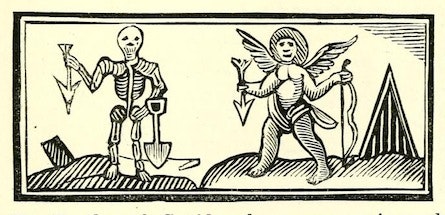
woodcut of an angel and a skeleton, both holding downward-pointing arrows

Thursday, September 2, 2021

reverse dragonball stew

(With apologies and indeptedness to Spwack's Reverse Owlbear Stew and Phlox's Orbseeker.)

For each stat, roll 3d6 and write down half the total (rounded down) for the stat and the lowest die as the defense (using the highest lowest die for each pair of stats).

  • Strength and Constitution -> the FORT defense (blocking).
  • Dexterity and Wits -> the REF defense (dodging).
  • Intellect and Charm -> the WILL defense (resisting).

Your max HP is equal to the sum of your three defense ratings. Resting a few minutes and taking refreshment restores 1 lost HP after a fight. Taking a night's rest in a safe place restores 1d6 HP. Regular attacks do 1d6 damage, awkward or unarmed ones do the lower of two d6, dangerous ones do the higher of two d6 and things you wouldn't expect someone to survive do 2d6 or more.

To succeed on something that needs a roll, you must roll a d20 under or equal to the relevant stat (Ref's decision) plus all ranks in relevant skills. If this is a roll against an obstacle (like a foe's defense), your roll must be higher [not equal to] the relevant obstacle or defense rating. If this is an opposed roll and your opponent rolled under or equal to their total, you must roll under or equal to your total but higher than their roll.

When you create your character, split 10 ranks between the following skills. You may not start with more than 4 ranks in any skill.

  • Acrobatics
  • Attraction
  • Engineering
  • Fencing
  • Hypnosis
  • Intimidation
  • Medicine
  • Naturalism
  • Navigation
  • Physics
  • Riding
  • Skullduggery
  • Sailing
  • Shooting
  • Stealth
  • Striking
  • Swimming
  • Wrestling

After an adventure or a season of training, you may roll 2d6 for up to three different skills you exercised. If the result is more than your current ranks in the skill, gain a rank. You can never gain more than ten ranks in a skill.

Characters who carry more things than their Constitution can't have reduce all their defenses by the excess (gear never affects HP). Bulky items count as two things, thrown weapons and similar small stuff can be bundled.

Characters start as fighter B, orbseeker B or fighter A/orbseeker A.

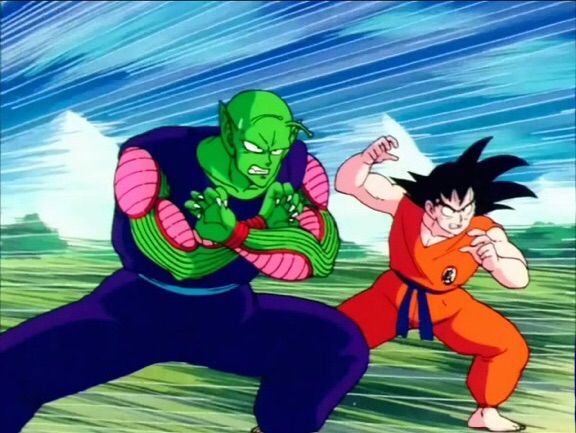
Goku DBZ and Piccolo DBZ making fighting poses at an enemy not pictured.

fighter type characters

Fighters cultivate their qi in order to perform amazing martial arts. For each template, fighters increase one of their defenses (and therefore their max HP) by 1. Gain a fighter template whenever you defeat a foe that is stronger than you.

  • A Bronze Body. If you take no action other than resisting an attack, reduce damage you take from it by your relevant defense.
  • B Golden Core. You have a pool of qi dice (QD) equal to the number of fighter templates you have. You may roll any number of QD from your pool instead of normal damage dice for an attack. Whenever a 6 is rolled on a QD, add 5 to the sum of the dice and reroll the die (repeating this for subsequent 6s). After rolling QD, your pool is diminished by 1QD for every reroll. Your pool is restored by spending a suitable amount of time eating, resting or meditating.
  • C+. +1 technique.
A list of sample techniques follows. Don't roll QD for an attack unless it hits.
  1. One Hundred Blows. Deals [sum]x2 damage, divided between all the targets you can hit with (separate) Strength attacks. There is no upper limit on the number of targets.
  2. Concussion. A Constitution attack that deals [sum] damage to everyone within [dice]x2 paces of you and 1 damage to you.
  3. Monkey Arms. You may make up to [dice] Dexterity attacks at targets up to [sum] paces away.
  4. Owl Eyes. Whenever your REFLEX saves you from an attack, you may immediately use this technique to make a Wits attack dealing [sum] damage to your attacker.
  5. Feint. An Intellect attack that paralyzes the foe for [dice] turns (or until they take damage) instead of damaging them.
  6. Demon Beam. A Charm attack that deals [sum] damage that cannot be reduced to a target up to [dice]x5 paces away.
  7. Many Shadows. Creates [dice] duplicates of you, dividing your current HP between them (round down). Any duplicates that clasp hands re-unite add their HP together. Otherwise, all duplicates (and their HP) except your choice of one dissolve after 60 minus [sum] minutes.
  8. Light Body. You can fly, faster than anyone with a lower [sum].
  9. Iron Body. [sum] body parts become indestructible for [dice] rounds.
  10. Devil Feint. Calls for an opposed roll with one foe (you get +[dice] to your total), the loser of which takes [sum] damage.
  11. Fierce Aura. You glow brightly for [sum] minutes. During this time, your HP is increased by [dice]. When this ends, lose half your current HP (rounded down).
  12. Double Strength. For 30 minus [sum] turns, increase all your stats and defenses by [dice]. After the effect ends, lose half your maximum HP.
  13. Fusion. Using this technique requires two fighters who know it to each select the same number of QD (without consulting each other beforehand); if they fail to do so, the fusion fails.
    A fusion adds together the stats, defenses and HP of the fighters who formed it, uses the better of either of their skill ranks for each skill and has QD equal to however many dice were not exhausted in the fusion. After [the lower of the two sums] turns, the fusion ends and the two fighters each get half the fusion's HP, rounded down.
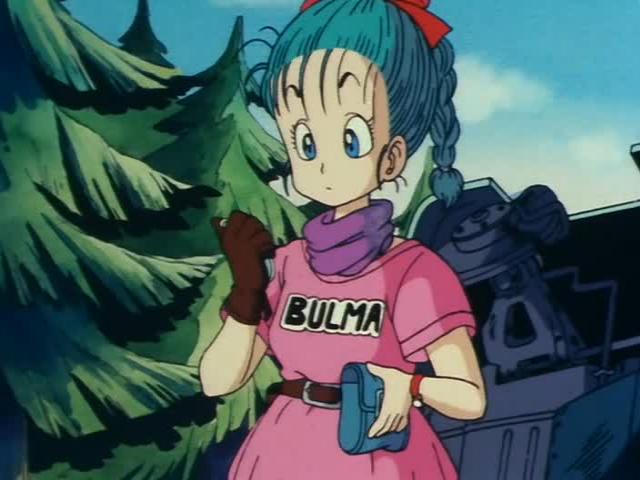
Bulma DBZ looking at the dragon radar.

orbseeker type characters

Orbseekers roam the earth, seeking communion with mystic orbs. For each template, orbseekers gain one rank in each of two different skills (no skill can have more than ten ranks). Gain an orbseeker template whenever you awaken a new orb.

  • A Orb Waker. You can smell dormant orbs when they are nearby. If you hold one in your hand, you can awaken it (roll for a random power below) or return it to dormancy.
  • B Domain. You may take a few minutes to commune with an awakened orb and ask it a question that can be answered in no more than three words. If the question is within the orb's domain, it will answer. There is a 1-in-20 chance of the orbseeker contracting Orb Madness (see below) from this consultation.
  • C+. Invention. Every week that you bear an awakened orb, you have a [orbseeker templates] plus [awakened orbs] minus [current inventions] in 20 chance to create a prototype of an invention (random arcanum). These all have a [uses] in 6 chance to stop working ofter each use.

Anyone who holds an awakened orb may invoke its power, although there is a 1-in-6 chance that an orb falls dormant for a week after being invoked in this way. Awakened orbs call their bearers to one another, even from far away. A list of some sample orbs follows.

  1. Orb of the Ram. The bearer of this orb may conjure a tremendous force that smashes a hole in barriers up to a foot thick. If it strikes a being, it deals damage like 2QD. Domain: anger, locks and keys, unexpected acts of violence.
  2. Orb of the Ox. The bearer of this orb may transform into a large, monstrous form that is inconveniently large and extremely strong. Double their Strength, Constitution, FORTITUDE and HP for 3d6 minutes, at the end of which they lose half their current HP. Domain: growth, strength, ironic reversals.
  3. Orb of the Twins. The bearer of this orb may cause two similar things to experience what the other experiences, with the potency of the effect increasing the more similar the things are. Domain: disguises, substitutions, things that come in pairs.
  4. Orb of the Crab. The bearer of this orb may surround it with a magical sphere shell up to ten paces in diameter. Though transparent, nothing can pass in or out of the boundary of the sphere until the bearer lets go of the orb or one hour passes, whichever comes first. Domain: shells, walls, things that are buried.
  5. Orb of the Lion. The bearer of this orb may create an unbearable thunder-like rumbling, making an Intellect attacks against anyone within shouting distance. Those successfully attacked take no damage but cannot approach the orb until the thundering subsides in thirty seconds. Domain: fears, thunder and lightning, things that are heard but not seen.
  6. Orb of the Maid. The bearer of this orb may, in any place where things are stored, retrieve any object other than another orb that they have stored away since they first awakened the orb. It does not matter how long ago they stored the object in question or how far away it is, but this effect will not retrieve anything that has been removed by another person since it was deposited. Domain: storage, neglect, things that have been kept safe.
  7. Orb of the Sting. The bearer of this orb may render any amount of food or drink in their presence poisonous, resolved as an Intellect attack dealing up to 7QD of damage, divided (before rolling) between all consumers. The names of any creature slain in this way become permanently tattooed on the body of the bearer. Domain: poisons and venoms, betrayal, things that creep upon the earth.
  8. Orb of the Scales. The bearer of this orb may solemnize any promise or agreement between at least two people. If any one of them breaks the agreement, the others may (at their option) either transport the offender to their presence or immediately transport themselves to the offender. Domain: agreements, punishments, things that are deserved.
  9. Orb of the Arrow. The bearer of this orb may name any thing other than another orb that has a name and know the direction and distance to that thing. Domain: weapons, targets, things that have missed the mark.
  10. Orb of the Crocodile. The bearer of this orb may call forth a tremendous terrifying beast from the shadows. It obeys your commands slowly but implacably for thirteen minutes, and can only be turned away or banished by extremely bright light. Domain: darkness, deep water, unusual hybrids.
  11. Orb of the Jar. The bearer of this orb may make Intellect attacks that, though they deal no damage, cause the being so attacked to become imprisoned within an available, prepared vessel if two such attacks are successful before the orb falls dormant. Anyone who either opens the vessel or invokes the orb to do so may free a prisoner. Domain: prisons, traps, the contents of containers.
  12. Orb of the Fish. The bearer of this or may, with a touch, cause an air-breathing creature immersed in water to become a water-breathing creature or a water-breathing creature on dry land to become an air-breathing creature. This transformation is permanent and also adapts the creatures skin and limbs to their new environment. Domain: abundance, migration, novelties.

Anyone who rests with more awakened orbs than they have orbseeker templates has an [orbs]-in-20 chance to contract Orb Madness from one of them. Only returning the orb that causes madness to dormancy will stop and Orb Madmen from raving portentious nonsense related to that orb's domain. They will fight without restraint to stop anyone who attempts to remove the orb from their possession.

Shenron DBZ appearing to grant a wish.

Anyone who gathers seven awakened orbs together and shouts, "eternal dragon, grant my wish!" Causes a terrifying mystical dragon to appear. The dragon will grant one wish (although it has been known to refuse wishes for seemingly arbitrary reasons) before disappearing. The orbs used to summon it fall dormant for one year and are scattered to the ends of the earth.

money and equipment

The various nations of the Major Continent all use the same currency, the zorkmid. It has many boring uses, but its interesting use is prize money. The All Earth Martial Arts Tournament is hosted once every four years. This is a double elimination tournament with sixteen competitors. A competitor loses their match if they concede, touch the ground outside the ring, lose consciousness or attempt to kill or permanently injure their opponent. The first place winner at the Continental Martial Arts Tournament takes home 7,500,000zm, the second place finisher, 2,500,000zm and anyone who wins three matches 1,000,000zm. At a local martial arts tournament, the prize money is usually much smaller.

Some boring things to spend money on:

ThingPrice (zm)
Candy99
Sunglasses199
Soft drink199
Fried snack249
Box lunch299
Sandals349
Liqour (glass)399
Colorful Hat499
ThingPrice (zm)
Hotel (hourly)699
Sit-down entree799
Liqour (bottle)999
Shirt1,499
Pants1,999
Shoes2,199
Hotel (nightly)2,499
Hotel (weekly)15,999

Ordinary clothes do not matter in combat. Here is some gear that does:

ThingPrice (zm)Effect
Martial arts uniform2,499Martial artists recognize your school.
Hard helmet4,499+1 defense against all physical attacks.
Gun9,999Damage die explodes like QD. Lose all martial arts credibility.
Body armor19,999Minimum defense 7 against physical attacks, reduce damage taken by 1.
Sword49,999Deal dangerous damage, look baddass.

Characters start with no more than 10,000 zorkmids worth of stuff, and one-tenth of the remainder in cash.

Friday, April 23, 2021

fakemon

There's currently a buzz in the blogging scene for legallydistinctemon aka legamon or fakemon, and despite trying to stay out of it I could not help writing a fakemon battle system that is incompatible with most of the existing prior art. Some links to that other, better prior art: deus's generator tables, Phlox's automation of same, another generator on liches get stitches and, perhaps most prominently, Lexi's You Must Acquire Them.

As a disclaimer, I don't really think fakemon battles, even the streamlined version that I've written here, fits particularly well into existing structures of TTRPG play. Stopping everything to do tactically intensive 1-on-1 fights just doesn't gel very well with any sort of party play and I'm not sure that one should really try. This post certainly doesn't, it's just fakemon battle rules.

The math of pokemon games is trivial for computers to do but monstrous for humans, so we're not going to try to replicate their level of crunch. In particular, level grinding isn't a part of the game I think it's particularly worth imitating so we're dropping level from the game's math entirely. Fakemon have four stats: Attack, Defense, Speed and Special all rated 1-5. Max HP is equal to Defense times 3, plus the sum of the other stats. There's no leveling up, evolving to a new form should probably increase its stats.

Every round, both sides choose moves in secret. Unless otherwise noted, fakemon know a normal move and a special move of their type, which corresponds to a particular biome. Then, roll two dice and determine if either fakemon wins the initiative based on their speed (this table is equivalent to a Speed-in-12 chance to win the initiative on each side, if you're the sort of weirdo who has a d12.):

Speed Home team first Away team first
1 2,3 11,12
2 2,3,4 10,11,12
3 3,4,5 9,10,11
4 2,3,5,6 8,9,11,12
5 2,3,4,5,6 8,9,10,11,12

Whoever wins the initiative gets to use their move first. If no one wins initiative, moves get resolved simultaneously, which can cause mutual knockouts.

Fakemon have dice for normal moves equal to their Attack stat and dice for special moves equal to their Special stat. Unless otherwise noted for a move roll as many dice as you choose, discard any 6s and deal [sum] damage, minus opponent's Defense for normal moves and Special for special moves. Fakemon deal an extra [dice] of damage when using special moves of their own type. Discarded dice can't be used again until your fakemon can rest. If damage reduces a fakemon to 0 HP they faint and can't fight anymore.

Types have vulnerabilities and resistances. Fakemon take double damage from moves their type is vulnerable to and half damage from moves their type is resistant to:

Type vulnerable to resistant to
ROCK CITY, WATER, VENOM GRASS, SKY
GRASS ROCK, VENOM WOOD
WOOD GRASS, VENOM SHORE
SHORE WOOD, SKY, VENOM CITY, WATER
CITY SHORE, VENOM ROCK, SKY
SKY CITY normal*
WATER CITY normal*
VENOM SKY, WATER VENOM

There are no normal type fakemon, that would be boring.

Fakemon can only use special SKY moves if they are able to fly about; if a SKY-type fakemon does not have room to fly, they lose their resistance to normal moves. Similarly, fakemon can only use special WATER moves if they are swimming and WATER-type fakemon lose their resistance to normal moves on land.

If you use an item in battle your side can't use a move that turn. Some classic fakemon items:

  • Antidote ($10): makes a fakemon resistant to VENOM moves for a few hours, but reduces their max HP by 1 for every previous day they've taken antidotes.
  • Elixir ($120): restore all discarded dice for a fakemon.
  • Fake ball ($12): captures a wild fakemon if a roll of 2d6 is greater than their current HP.
  • Potion ($30): restores a fakemon to max HP.
  • Revive ($200): restores a fainted fakemon to half their maximum HP.

Friday, March 12, 2021

some game economics for the ancient world

Before launching into a long post about economics of the ancient world, let's put the exciting part at the top, the random treasure hoard generator. These are going to be significantly smaller than typical fantasy adventure hoards, but I've tried to callibrate them to generate the kidns of hoards people actually find from the bronze and iron ages:

Now, for the less flashy stuff. Before we can really talk about economics, let's establish some units of measurement. These are going to be largely based on historical units of mesopotamia and the eastern mediterannean in antiquity. My sources are kind of all over the place on these so I'm not going to be citing much, but the system I'm giving here hews pretty close to the coins and measures used in Talmudic literature.

A talent (kikar, if you prefer) weighs sixty pounds (maneh), each of which is fifty weights (shekel) of about eight and a half grams; this makes a pound of about 425 grams rather than the 453.59 of the avoirdupois pound, but that's close enough to use the familiar word in my book. A wet measure or dry measure are both a unit of capacity approximately equal to 144 medium-sized eggs (about nine quarts).

goods and their prices

The basic unit of money is a weight of silver. Although actual prices vary by place and season, most people will say that a silverweight should buy:

Wednesday, March 10, 2021

solo dungeoning experiment

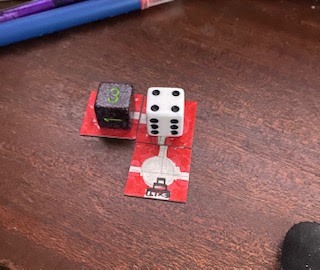
I have done very little actual dungeon crawling in my gaming career. I have also done basically no solo gaming, so I was inspired to try to get a feel for both things in a more practical and less theoretical way. So, I made myself some dungeon tiles:

I decided to fill in the empty spaces red after I took this. Passages (round) have about a 1 in four chance of traps and a 3-in-8 chance of being the sometime abode of monsters. Most of the treasure (triangles) is in the larger chambers (square) which are much more likely to contain monsters. And I adopted a probably absurdly basic dungeon crawling procedure:

  • For every new tile, roll two distinct dice. If there's a random chance of something bad, that's keyed off the darker die. If there's a random chance of something good, it's keyed off the lighter die. Doubles mean wandering monster.
  • If part of a larger chamber is drawn, draw more chamber pieces until the chamber is complete. If there are multiple keyed things in the chamber check separately for each.
  • When a monster is indicated, roll a die: 1-2, their strength is 1 per monster, 3-5 it's 2 per monster and 6 it's 3. Another die indicates number, divided by strength (round up).
  • In a fight, every 2 companions or 1 fighter adds a die. Monsters roll their total strength in dice. Every die hits on 2-in-6 and a hit figure can save on 2-in-6 or die. If you want to escape from the fight roll your opponent's strength or better on two dice.
  • A triggered trap hits one figure, who can save or die.
  • If you find the magic fountain, you can wish. Roll a game of craps; if you win, you get your wish and if you lose a water demon (1x4, takes two hits to kill) attacks you.

With that established, I set about dungeon crawling. We set out with two fighters and four companions. Not all of us would escape the dangers of the dungeon.

  1. From the exit we went North to an empty passage.
  2. West, we encountered wandering monsters (1x3) whom we defeated without a loss.

  3. North, the passage was trapped but we evaded it.
  4. North, an empty passage.
  5. North, a chamber opened before us with monsters (2x3) but no treasure.
    We fled (6+ on 2d6) and escaped back down the passage, evading the trap again.
  6. Returning to the exit, we struck East, where a chamber opened again containing monsters (2x3) but no treasure. We chose to fight, took down one of them but lost three of our companions, then fled (4+ on 2d6).
  7. West of the exit is the only way left, where we lost our last companion to a trap. Foolishly, we pressed on.
  8. South, there was a chance of a monster but none was present.
  9. East, an empty passage.
  10. East...a magic fountain! We chose to wish, and were immediately rewarded. Being sentimental, we wished our friends back to life. Then, feeling confident again, we pressed on.
  11. Returning West and then South, we found monsters (2x2) lying in wait.
    We dispatched them with no losses.
  12. East, more monsters (4x1).
    We fought and defeated them, but they killed all our companions (who had only just been returned to life).
  13. South, empty passages.
  14. East, more of the same.
  15. East...a trap! Which killed one of our fighters.
  16. North, nothing.
  17. East, we found an alcove with a bit of unguarded treasure!
    Now all that remained was to evade the two traps encountered on the way over (which our last fighter did) and finally to escape the dungeon with a bit of loot (but five dead friends...)

I'm not sure what my reflections on this experiment should be. It was pretty fun, but in the future I probably wouldn't document with photos since that took me out of the game a fair bit. 

  • The combat worked, I think, but monsters are probably a bit too strong, perhaps monsters with 1/2 (companion), 1 and 2 strength would even things out somewhat. Probably also include a wizard who can toss +2 dice onto a round a limited number of times.
  • Using some sort of reaction or negotiation options rather than automatic hostility would be good too. 
  • Traps felt...ok? I liked the danger of knowing we had to backtrack past them, but losing party members to traps felt kind of arbitrary.
  • I liked the wish, although I had not decided when I included it what things could be wished ofr. Having more random magic in the game would be fun.

Tuesday, September 15, 2020

factoring ad&d classes: a modest proposal

This post is an attempt to sketch out a different way that the base book classes of AD&D 2e, an edition of the game I never directly experienced, could have been developed in another edition.

Obviously, now we have the benefit of three additional editions of official D&D and numerous offshoots and hacks widely available, so this isn't to say, "this is what 3e/4e/5e should have been" as much as, "this is another direction that could be explored," now that we've taken some probing steps in various directions.

So: classes in 2e AD&D were derived from the four types:

Warrior Wizard Priest Rogue
Fighter Mage Cleric Thief
Ranger Illusionist Druid Bard
Paladin      

Let me single out a feature that i rather like: only the four core classes are always available to players. From the DM's chair, I find this very appealing; it's a much lighter demand of a setting that it have fighters, mages, clerics (though clerics present some problems) and thieves than that it also have barbarians, bards, druids, monks, paladins, rangers and sorcerers (to say nothing of warlocks) as well. Bards, druids and monk are particularly egregious in terms of the amount of baggage that their inclusion brings. Although 4e and 5e took the step of distinguishing common and uncommon "races," they do not do the same for classes (which, for my money, do a lot more heavy lifting in terms of providing implied setting).

Another interesting thing about this grid is the idea that we could make the rows meaningful as well as the columns. for example, the Ranger and Druid do seem to have something in common, as do the Bard and Illusionist, suggesting:

Warrior Wizard Priest Rogue  
Fighter Mage Cleric Thief  
Ranger   Druid   Wilderness
  Illusionist   Bard Trickery
Paladin        

...hey, this looks a lot like:

Defender Controller Leader Striker  
Fighter   Warlord Rogue, Ranger
Martial
  Wizard   Warlock Arcane
Paladin   Cleric   Divine

I'll freely admit that this is a part of 4e's design that i genuinely do like. I think you could potentially communicate a lot of setting using a matrix like this, especially if your sources of power corresponded to diagetic factions. even the gaps in the table (though later books, of course, fill them) serve a purpose. It says something about what these sources of power are about that there would be no martial controller, arcane defender or divine striker, for example.

However, this tableau is of basically no use for restricting available classes, which was one of the things that the 2e one does so well. Furthermore, little enough is directly shared between classes of the same source of power that they feel, to me, a lot more like palette swaps on the same game math than genuinely distinct types of character. This is exacerbated by the insistence on filling in gaps in the source/class matrix

Returning to our spread of classes in 2e AD&D, let's use a different axis to split things. Instead of source of power, let's use (3 position) alignment:

Warrior Wizard Priest Rogue  
Ranger, Paladin   Cleric   Lawful
Fighter Mage Druid Bard, Thief Neutral
*Berserk     *Assassin Chaotic

Italicized classes are ones that we'd expect DM veto power on. I'm adding in a couple of thematic Chaotic classes, nothing to see here. there's a couple of things that i don't love about this. First, as in 4e there's no clear way to use this table to restrict available classes; the neutral classes don't correspond to the core classes (druids in particular probably should not be the core priest class). Second, i don't like the idea of the core classes being restricted to neutral alignment. i'd prefer something like this:

My proposal is to distinguish the alignment of druids and bards from 'neutrality' (probably replacing that with a better term). I'm merging paladins into rangers (as we don't necessarily need two distinct Lawful classes about defending the innocent), and making clerics no longer a core class but instead a Lawful-only specialty.

Warrior Wizard Priest Rogue  
Fighter Mage   Thief any
Ranger   Cleric   Lawful
    Druid Bard Old Believer
Berserk     Assassin Chaotic

This setup involves four alignments:

  • Worldly - occupied with the here and now, uninterested in bigger questions or grand conflicts. most scoundrels.
  • Lawful - follower of the nameless craft gods of the Heavens. most people, to some extent are Lawful.
  • Old Believer - keeps the old ways in the secret names of the old gods of the Earth. back-country folk, to some extent, are Old Believers.
  • Chaotic - traffics with the uncanny forces out of Deep Sea and Far Sky. most Chaotic characters will disguise their rites; wizards are always under great suspicion of being Chaos cultists.

This is better, in my book, but it can be further refined. Notice that there is no longer a core Priest class, and take the obvious step of collapsing that column with Wizard:

Warrior Wizard Rogue  
Fighter Mage Burglar any
  Druid Bard Old Believer
Ranger Cleric   Lawful
Berserk
Assassin Chaotic

This is approaching what I'd really like to see. We understand fighter, mage and thief to always be on offer. The specialty classes are all bound up with a diagetic alignment (in this case a mostly religious meaning). Any type is available to any alignment, but that doesn't mean that every alignment has a specialty in every type. Indeed, in the first draft of this post I had a Necromancer Chaotic wizard specialty rather than Berserk. While that could work, it seemed better to me to place all wizards under the suspicion of being Chaos magicians by associating wizardry and Chaos.

Available talents ("nonweapon proficiencies" need rebranded) would be chosen by combining the Warrior, Wizard or Rogue list with the appropriate alignment list. Other distinctions (say, what a cleric can do that a lawful mage cannot) would be as noted in the specialty class.

If one wished to customize the array of classes offered to a given setting, identifying alignments and their associated specialties seems like a natural way to do this; for example, someone could remove the Old Faith and add in something home-brewed.

In my dream vision of this, the core classes each get a spread to themselves. Each aligned pair of specialty classes could then be presented in a single spread, one on each facing page. Nine classes in twelve pages.

Wednesday, July 15, 2020

one page rules and five-way alignment

From the chaos of whatever I'm working on at the moment, relatively complete one page player rules for a retrohack have fallen. It's difficult to make a complete account of one's influences, but the frame of the thing (and the one page format) owes a lot to Searchers of the Unknown, the starting equipment tables to Necropraxis, the encumberance and saving thows to Delta, the use of hit points for damage dealt to Akratic Wizardry and the 'length in feet' polearm rule to the Nine and Thirty Kingdoms. My innovations are mainly the the Guard/Agility defense system, canny/uncanny check mechanic, the (minimal) magic-working rules and the five alignment system.

The five alignments are something I've been messing with a fair amount in the context of traditional fantasy RPGs, and I've gone through several different incarnations of how I want to handle them. A year or so ago, I read Cuisine and Empire which, in its general treatment of the culinary ancient world, discussed a group of theories about the nature of the world it described as 'Cosmological Correspondences.' What I'm working towards with the alignments in here is in the vein of those theories, a way of dividing the world, society, the body and so forth into thematic groups:


Weight Star Ring Red Bright
planet Jupiter Mercury Saturn Mars Venus
direction West Center North South East
season Fruit Winter Grain Autumn Spring
tissue Bone Nerve Viscera Lean Fat
color White Blue Black Red Green
taste Pungent Sweet Salty Bitter Sour

I intend to add spell, monster and treasure lists themed around these five alignments, probably one page each.